“School says they’ve had a great day… so why do they come home upset, angry or overwhelmed?”
It’s a question we hear from many parents.
Your child walks through the front door and, within minutes, they’re arguing, crying, refusing homework or having a complete meltdown. Yet when you speak to school, you’re told they’ve been happy and well behaved all day.
It can be confusing—and exhausting.
Every Child Gets Tired
All children feel tired after a busy day at school. Learning, concentrating and socialising take energy.
But for some children, the school day demands much more than most people realise.
They may be working harder to concentrate, cope with noise, sit still, manage friendships or complete classroom tasks. By home time, they’ve simply run out of energy.
Why Does It Happen at Home?
Home is where children feel safest.
Some children spend the entire school day holding themselves together. They follow the rules, try their best and keep their emotions under control.
When they get home, that effort finally catches up with them.
This doesn’t mean they’re being manipulative or deliberately “saving it” for you. Often, they’re simply letting go in the place where they feel safest.
“But School Says They’re Fine…”
This is something Occupational Therapists hear all the time.
Parents describe daily meltdowns, while teachers report a happy, settled child.
Both can be true.
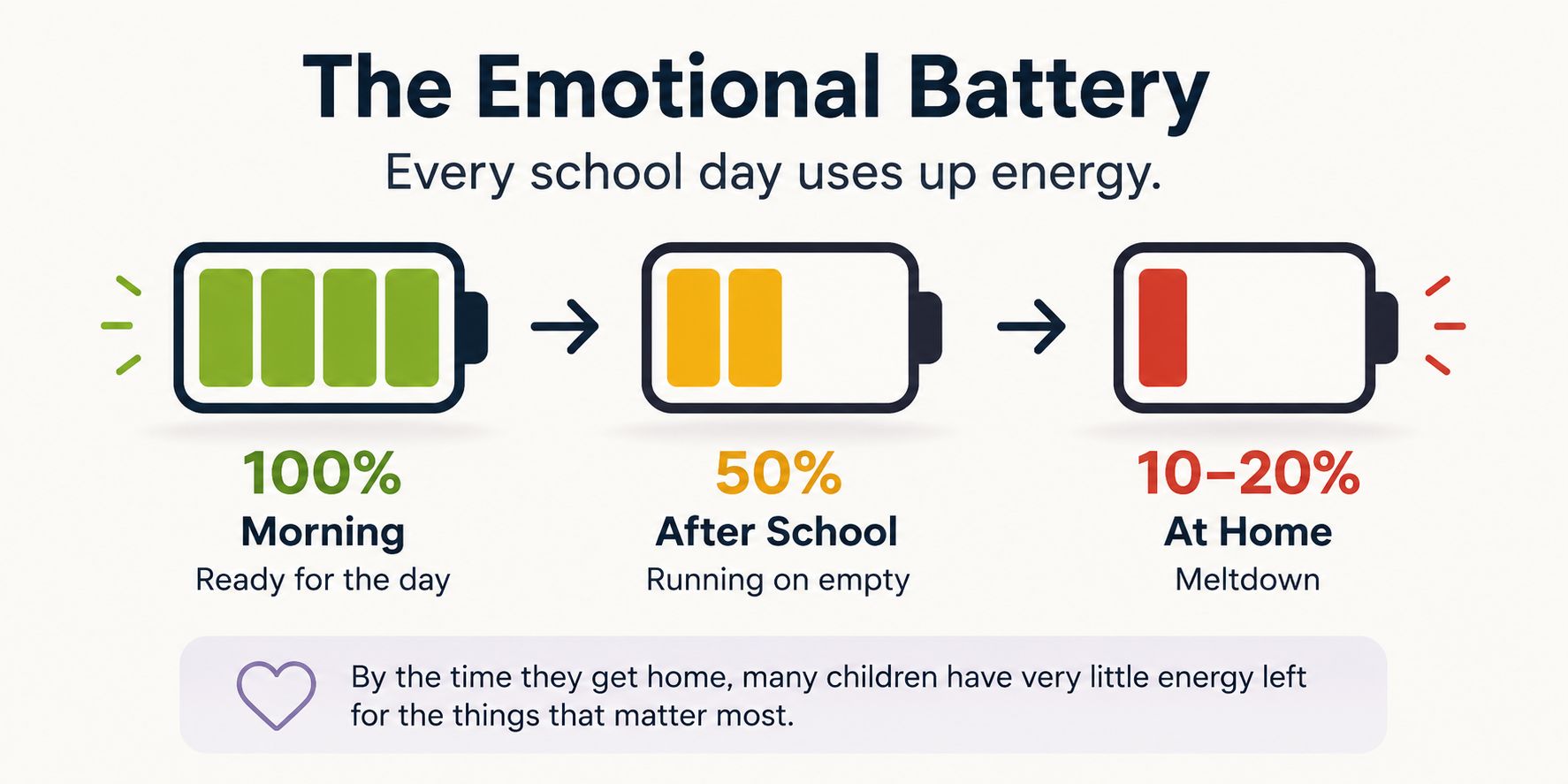
Many children manage to cope throughout the school day, but doing so may take enormous effort. By the time they get home, they have very little left in their emotional tank.
What Might You Notice?
Every child is different, but you may notice they:
- become upset over small problems
- refuse homework or simple requests
- argue more than usual
- seem emotionally exhausted
If this happens occasionally, it’s usually nothing to worry about.
If it’s happening most school days, it may be worth exploring why.
Could Occupational Therapy Help?
Occupational Therapists don’t just look at behaviour—they look at what’s causing it.
We consider factors such as sensory processing, emotional regulation, motor skills and the everyday demands placed on your child.
Understanding the reason behind the behaviour is often the first step towards helping your child feel calmer, more confident and better able to cope.
When Should You Seek Advice?
If after-school meltdowns are becoming a regular part of family life, or you’re finding yourself wondering why your child seems to cope everywhere except at home, it may be worth speaking to an Occupational Therapist.
Early advice doesn’t always lead to therapy. Sometimes, understanding what’s happening and making a few simple changes can make a significant difference.
You’re Not Alone
Many families experience this pattern, and it doesn’t mean you’ve done anything wrong.
Sometimes, after-school meltdowns are simply a sign that your child has been working much harder than anyone realised.
If you’re concerned about your child’s behaviour after school, we’d be happy to talk things through and help you decide whether an Occupational Therapy assessment would be beneficial. Contact us as info@kidsinsyncsw.com for more information