OT and SI Therapy
- Home
- OT and SI Therapy
How Occupational Therapy and Sensory Integration Works
Therapy your child will receive
Post assessment, a determination regarding therapy will be made and what therapy in specific should look like. The clnical data and professional observations guide the therapist to develop a bespoke form of theraputic intervention knowing that each child present uniquley.
A session could focus on Postural Control or Bi-Lateral Integration. It could include elements of Sensory Integration to focus on underlying sensory dysregulation. Each session is planned specifically for each child according to their needs. No wonder we get such great results!

Clinic Sessions
Where they take place
All sessions take place in our specialized Sensory Integration clinics, lasting approximately one hour. These sessions are led by our skilled Paediatric Occupational and Sensory Integration Therapists. With consistent therapy, noticeable progress is often achieved. We do require that all parents buy into our framework of consisent, regular and deicated therapy. It is on this model that the best results are achieved!
Whilst each session is planned in advance with an overall target framework, we let the child ‘show’ us their interest and motivations in each session. Using our skills we are able to adapt every session to the child on the day to ensure maximum access to the theraputic curriculim. In this way we achieve ‘buy-in’ from each child leading to productive and enjoyable sessions!


How Therapy Works
How many sessions?
The Sensory Integration model recommends an initial therapeutic regimen of 30 continuous sessions to ensure optimal consolidation of changes in the brain stem. In practice this is usually the starting point. The reality is that Occupational Therapy is usually a 12 -1 8 month venture of consistent therapy attendance in order to work through underyling issues. This is where we find the best changes take place as consolidation of theraputic inputs take hold in the brain and body.
We’re always here to address any concerns and will guide you toward the best course of action. If you’d like to connect with another parent to learn about their experiences at Kids In Sync South West, we’d be happy to arrange that for you.
Get hold of us today to see what Occupational Therapy and Sensory Integration can do for your child:
OT Sessions
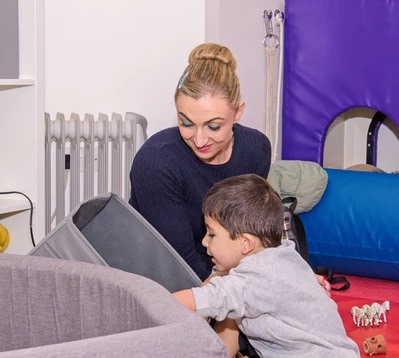
What an OT session look likes
Warm-Up & Connection
The therapist begins by welcoming the child and easing into the session with a calming or energising activity, depending on the child’s mood and needs that day. This could be something simple like bouncing on a therapy ball, doing animal walks, or chatting while drawing.
Regulation & Wind-Down
Towards the end, the therapist helps the child transition to a calmer state through soothing activities or quiet time, ensuring they’re ready to return to the classroom or home environment regulated and grounded.
Feedback & Home Strategies
The therapist shares observations and progress with the parent, carer, or teacher (depending on the setting) and may suggest ideas to try at home or school to reinforce learning.